
Shipping details will be shown here.
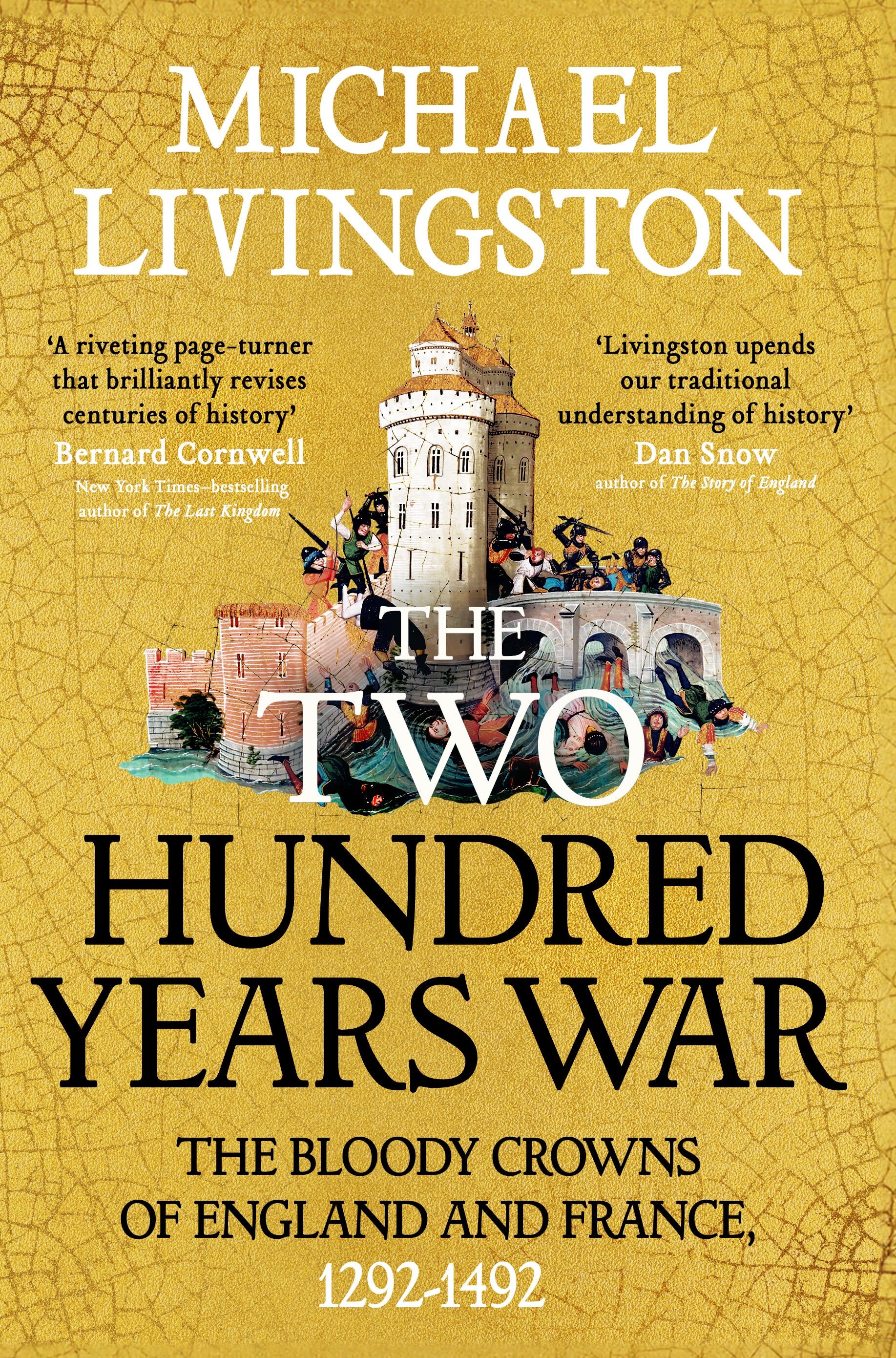
Two Hundred Years War
The Bloody Crowns of England and France, 1292–1492
Description
A new and radically original account of the longest military conflict in European history, which challenges the conventional periodisation of the ‘Hundred Years War’ to consider a much longer period of Anglo-French conflict.
<\/b>
Michael Livingston argues that the English lens through which the war has been viewed has led historians to define it in terms of English interests (most famously, the claim of the English Plantagenet king Edward III to be the rightful king of France), and that the events collectively labelled the ‘Hundred Years War’ are best seen as a sequence of steps in France’s struggle to define itself as a nation. For much of the period, France’s primary rival was indeed England. But it was by no means the only combatant. Burgundy stood in its way, too, as did Brittany, Flanders, Navarre and other rival powers.
Viewing France as the primary engine driving the war leads Livingston to consider a much longer timespan, starting with the Anglo-French ‘Pirate War’ of 1292 (which swiftly escalated into a fight over England’s feudal possessions in Gascony) and ending with the marriage of Charles VIII of France to Anne of Brittany by which Brittany was subsumed into the French realm.<\/p>","A brand-new history of the 14th and 15th century conflicts between England and France – original in approach and radical in its conclusions – that significantly broadens traditional narratives of the events historians have collectively labelled the Hundred Years War.","A riveting page-turner that brilliantly revises centuries of history","He's done it again! Livingston upends our traditional understanding of history, while simultaneously telling a cracking tale.","Livingston very bravely challenges the accepted narrative of the Hundred Years War — and its many myths. The best single-volume history of the Hundred Years War.","Makes the reader feel like they’re experiencing history that is fresh, new and exhilarating.","
[A] lively new account... The complex narrative is deftly handled, and Livingston’s is an engaging, sometimes thrilling introduction to an epic conflict whose historiography has been fought over almost as much as the poor ravaged territories of western France<\/p>","
Praise for Michael Livingston:<\/b>
Fascinating and engaging, and told with clear passion for the subject.<\/p>","Original, insightful and revelatory.","A brand-new history of the 14th and 15th century conflicts between England and France – original in approach and radical in its conclusions – that significantly broadens traditional narratives of the events historians have collectively labelled the Hundred Years War."]